Guides
Flooring Contractor Local SEO: A Practical Checklist
Flooring contractor local SEO checklist: Google Business Profile, local listings, service pages, reviews, schema, and call and booking tracking.
What to take away
- This flooring contractor local SEO checklist starts with accurate, consistent business information. Get the facts right everywhere they appear, then keep them right.
- Photographs of preparation work do more for a flooring business than photographs of finished rooms, because they show what the customer cannot judge.
- Write service pages about the work, not about the town. A page that lists neighborhoods and says nothing about substrates helps nobody.
- Review practice is part of this, and it has rules. Ask everyone, incentivize nobody.
- Measure calls and booked jobs, not rankings.
Block one: the basics, verified
- Business name, address and phone identical everywhere they appear, including your website footer, invoices and vehicle.
- Hours accurate, including how you handle calls outside them.
- Service area defined the way you actually work, rather than every town within two hours.
- Categories and services chosen to match what you sell, not everything you could theoretically do.
- Google Business Profile claimed and verified. Set its categories, services, hours, service area or address, and contact details to match your actual business. Google's documentation on managing a Business Profile explains what the profile controls and where the information shows up.
- Licensing or registration details stated only where they are current and accurate; verify them in the relevant state's official contractor-license lookup and any applicable city or county registry. The authority and requirements vary by location.
Block two: pages that answer a real question
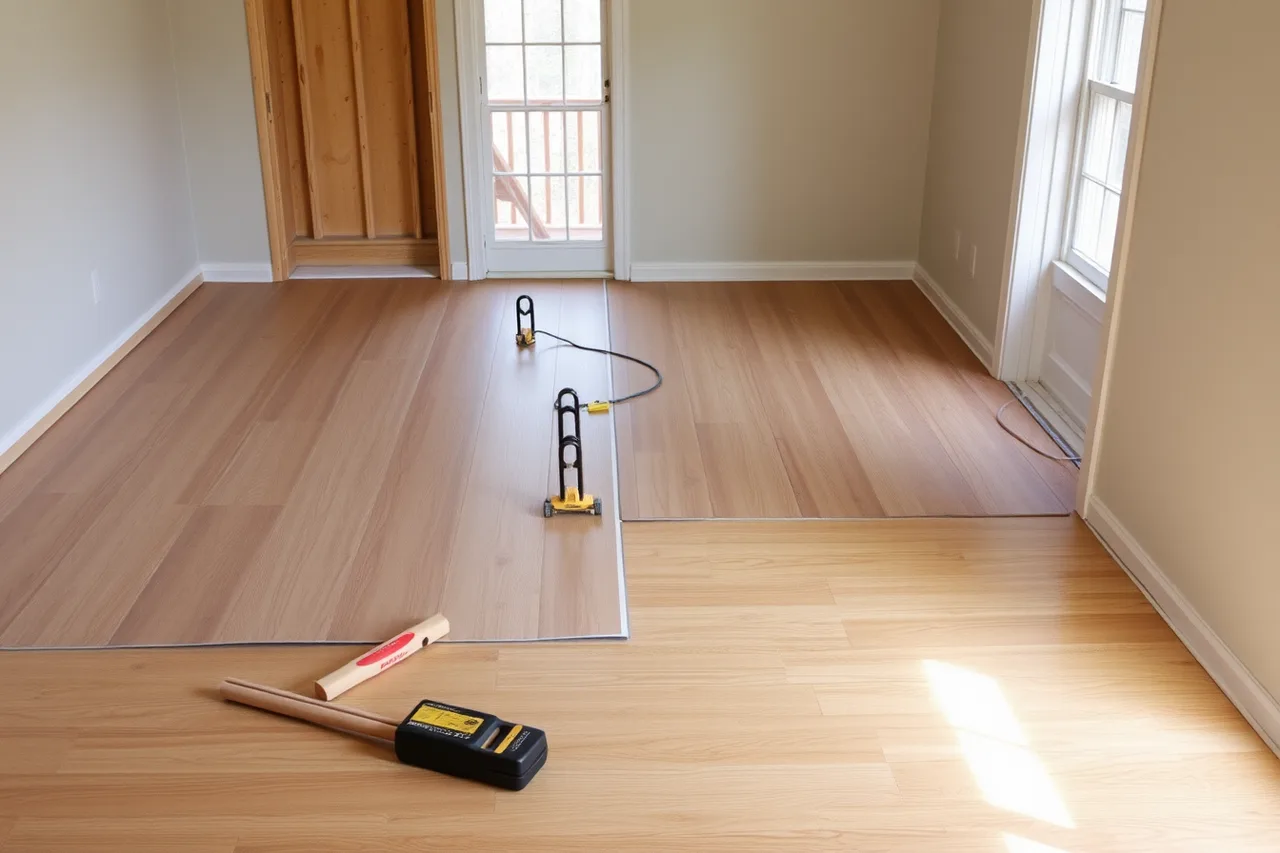
- One page per service that explains the workwhat is included, what is excluded, and what conditions the substrate must meet.
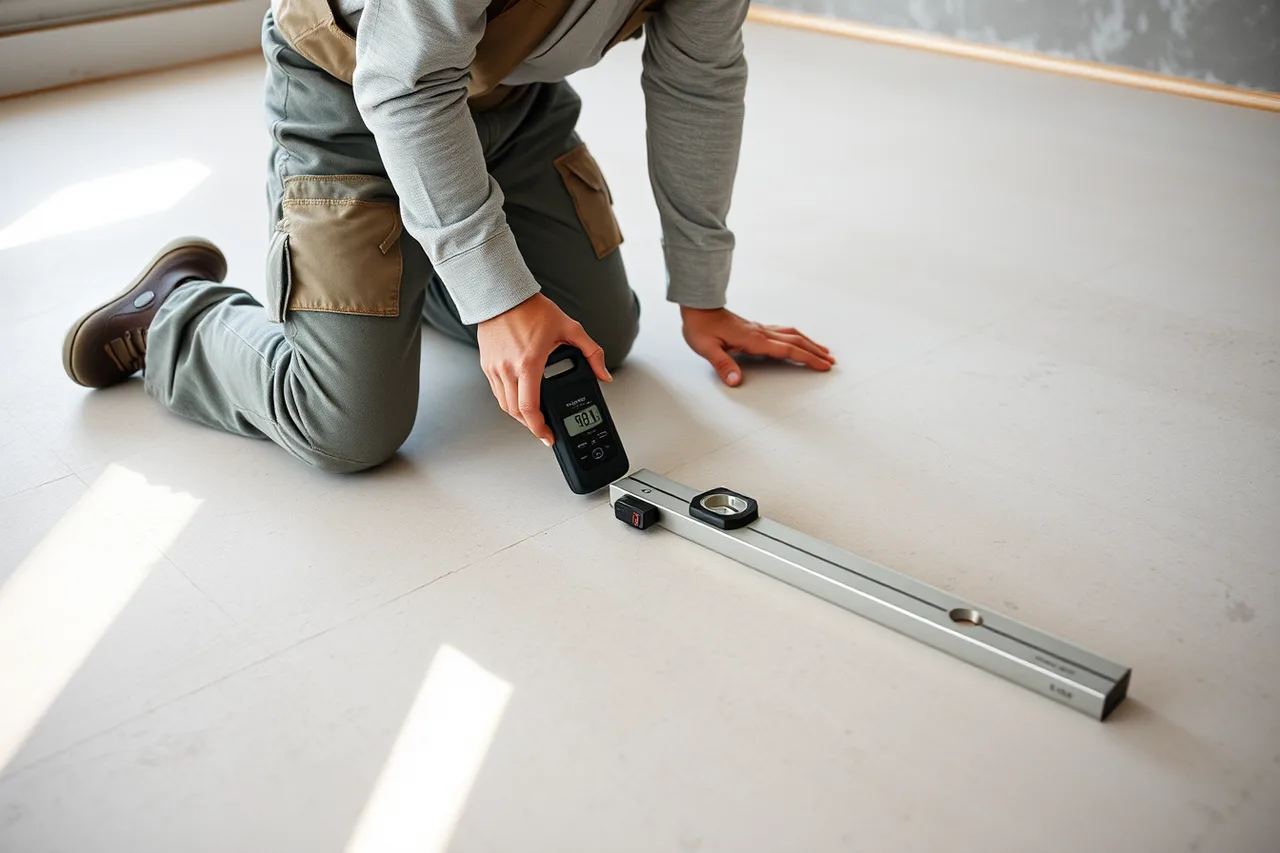
- A page that explains moisture and flatness testing in plain words. Customers search for the symptom, not the cause, so write about cupping, peaking and telegraphing. For example, if your service area has concrete-slab homes, build a page about glue-down luxury vinyl plank (LVP) over concrete and explain your actual moisture-testing and preparation process.
- Photographs of your own jobs at three stagesbefore, during preparation, and finished. The middle one is the one that converts.
- Clear pricing structure, even without pricessay that removal, preparation and transitions are quoted separately and why.
- A visible way to reach a person, with a stated response time you actually meet.
- Pages that load quickly on a phone in a driveway, because that is where they are read.
- Add Schema.org LocalBusiness structured data to your site only when it accurately reflects information visible on the page, such as your business name and contact details.
Block three: reviews, gathered properly
- Every completed job gets the same request, on the same terms, regardless of how it went.
- No incentive of any kind offered for a review, and no selection of who is asked. If you ask for Google reviews, follow Google's review policies and the Federal Trade Commission's Endorsement Guides (16 CFR Part 255) and Trade Regulation Rule on the Use of Consumer Reviews and Testimonials (16 CFR Part 465).
- Any connection between a reviewer and the business disclosed.
- Replies written to the difficult reviews with what happened and what changed.
- A record of when requests were sent, so the flow stays steady rather than arriving in bursts.
Block four: the local signals you control
- Consistent listings anywhere your business already appears, corrected rather than multiplied. Check existing profiles directly on Bing Places for Business, Apple Business Connect, Yelp, Nextdoor, and Angi; match the business name, address, and phone to your own records.
- Photographs uploaded regularly rather than once, since a profile that has not changed in two years reads as a business that may not exist.
- Questions answered on your profile in your own words.
- Content that names the products and substrates common in your area, because a slab market and a crawlspace market ask different questions.
Measuring it
Why it is worth tracking
- Calls from search
- It is the outcome
- Measures booked from those calls
- Tests whether the calls are qualified
- Jobs booked from those measures
- Tests the quote, not the listing
- Cost per booked job including your hours
- Comparable with every other channel
Why rankings are not
- Calls from search
- Rankings vary by device and location
- Measures booked from those calls
- A high rank on the wrong query brings nothing
- Jobs booked from those measures
- Cost per booked job including your hours
Track the four measures in the table by month. Record booked jobs that came from search inquiries so you can see whether calls and other leads turned into work; include your time when calculating cost per booked job. Use Google Business Profile Performance for profile interactions, Google Search Console for website search clicks, and Google Analytics 4 (GA4) conversion events for form submissions or booking requests. For calls and booked work, record the lead source in a call log or CRM; use a call-tracking service only if you can keep your public business number consistent. Anything more sophisticated is worth doing after this stops being informative, which takes about a year.
Where this connects
The channel comparison that tells you whether local search deserves more of your time is in the marketing and growth guide. What you say about scope on those pages should match the business plan outline and, more importantly, what your crew actually does. Never publish a credential that is not current, the discipline in the licensing and compliance guide.
The photographs that carry this whole effort come from real jobs. That means the machines in the equipment and setup guide and the site protection in the crew equipment checklist are visible in every picture, so keep the sites tidy.
Common questions
Do I need a website if I have a business profile?
A profile without a website leaves the customer nowhere to check your work. A simple site with real photographs and clear service descriptions is enough.
Should I create a page for every town I serve?
Only where you can write something true and specific about the work there. Thin pages that differ by a place name help nobody and read as filler.
How long does local search take to work?
Longer than paid channels and it compounds. Fix accuracy first, because that is the part that costs nothing and blocks everything else.
What is the fastest improvement available?
Photographs of preparation work with a sentence explaining what was wrong with the substrate. Almost no flooring contractor publishes these, and they answer the question customers do not know how to ask.