Guides
Turning flooring inquiries into jobs: a contractor's answer, measure, quote sequence
A step by step sales process for flooring contractors: how to answer, measure, quote and follow up so more customer inquiries turn into signed jobs.
What to take away
- Most lost jobs are lost before the price. They are lost to a slow reply, a missed appointment or a quote nobody could read.
- Answer, measure, quote. Each step has a time target, and the targets matter more than the wording of anything.
- At the measure, show the customer the substrate. It converts better than any brochure because it is true and visible.
- A structured quote wins against a cheaper single-line quote more often than owners expect, because it makes the other bid look incomplete.
- Ask everyone for a review, on the same terms, whatever the job was like.
The conversion sequence
- Answer. A person answers, or the call is returned the same day. Say what happens next and when.
- Qualify briefly. Rooms, product interest, building age, whether there is an existing floor, and the timeline. Five questions, not twenty.
- Book the measure with a real time window and turn up inside it.
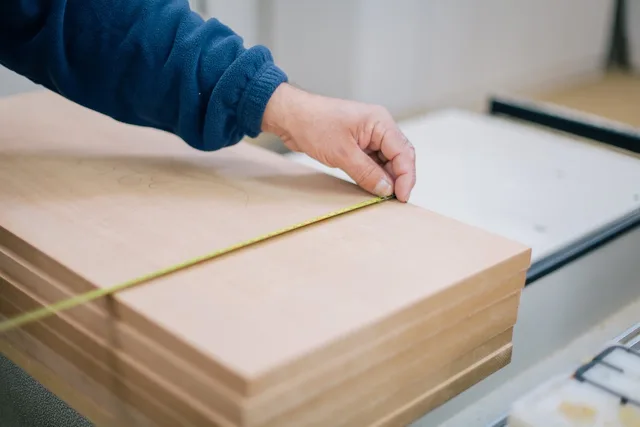
- Measure and test. Record dimensions, take moisture readings and check flatness, and tell the customer what you are doing while you do it.
- Quote within a day, structured by line, with conditions and exclusions in the document.
- Follow up once, usefully, by answering a question rather than asking for the job.
- Record the outcome and the reason, whether you won or lost.
Step seven is the one that improves the other six. A list of lost jobs with reasons beside them will tell you within a season whether you are losing on price, on speed or on trust.
What to do at the measure
Bring the straightedge and the meters and use them where the customer can see. Explain that the manufacturer's installation instructions set flatness and moisture limits, that a floor installed outside them is generally outside its warranty, and that this is why your quote may include preparation the other quotes do not.

Ask what they are trying to fix. A customer replacing a floor after a leak, one preparing a house for sale, and one who has wanted new floors for a decade need different conversations and often different products. Then tell them one thing they did not know about their own house. That is the moment trust arrives.
The quote that wins
| What the customer sees | Why it converts |
|---|---|
| Quantities they can verify | Nothing feels hidden |
| Separate lines for removal, preparation and transitions | Makes an all-in bid look vague rather than cheap |
| A rate for discovered work | Removes the fear of an open-ended bill |
| Conditions and exclusions stated plainly | Reads as competence, not as caution |
| A named installation window | Answers the question they actually care about |
When you are compared against a cheaper bid, compare scope out loud rather than criticizing the competitor. Ask whether the other quote includes removal, disposal, preparation and transitions. Most of the time it does not, and the customer works out the rest without your help.
Being findable and credible
A homeowner who hears your name will look you up before calling. Get the basics right: hours, service area, a phone a person answers, and photos of your own work.
Google's documentation on how business information is managed and verified in a Business Profile explains what that profile controls and how information stays current, so read it once instead of guessing.
Reviews carry more weight than anything you write about yourself. Ask every customer the same way. Never make an incentive part of it.
Disclose connections where they exist, as the Federal Trade Commission guidance on soliciting and paying for reviews requires. A steady flow of ordinary reviews reads as more genuine than a burst of perfect ones.
Do not win work you cannot deliver
Conversion is only useful if the crew days exist. Check the schedule before you promise a date, and confirm the tools for the scope from the equipment and setup guide and the consumables from the crew equipment checklist.
Never advertise a credential you do not hold, which is one reason the licensing and compliance guide belongs in your marketing file. The rates you quote come from the pricing and profit guide, and the wider channel picture is in the marketing and growth guide.
Common questions
How fast is fast enough to reply?
Faster than the other two contractors the customer called. In practice that means the same day, and it is the cheapest competitive advantage available to a small business.
Should I give a price over the phone?
Give a range with the conditions attached, or say plainly that a price without a measure would be a guess. Both are honest. A confident number that changes later is not.
How many quotes should I expect to win?
Track your own rate by channel rather than chasing a benchmark. A falling rate in one channel usually means the channel changed, not that you got worse.
What loses jobs most often?
Not turning up inside the window, and quotes that arrive late. Both are within your control and neither costs money to fix.