Guides
Flooring Contractor Equipment Brands: What to Check Before Buying
A look at flooring contractor equipment brands, including Husqvarna, Blastrac and Diamatic, with buyer checks, safety, resale and ownership math.
What to take away
- The 2027 shortlist runs on five platformsHusqvarna, Blastrac, Diamatic, Cimex and National Flooring Equipment, each with a different service story.
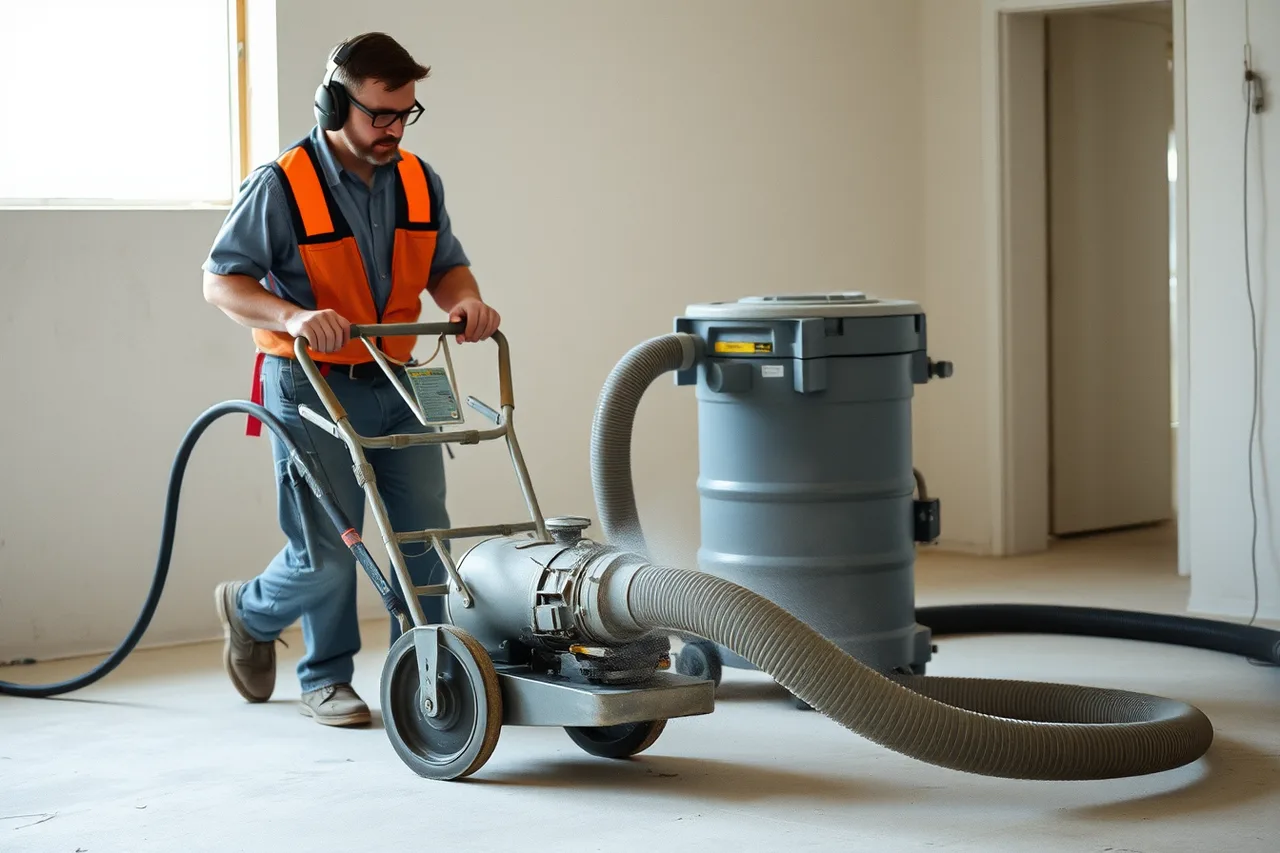
- Dust extraction is not an accessory. Concrete grinding releases respirable silica, and adhesive removal releases solvent vapor, so the shroud and vacuum are part of the machine.
- Check the circuit before the catalog. A single-phase 120V grinder and a three-phase 480V planetary are different purchases for different buildings.
- Consumable cost per crew day decides the real price. Diamonds, blades and bags outrun the machine payment.
- Resale evidence is a specification. Ask what a used unit of the same model sold for and how long it sat.
What the 2027 comparison actually covers
This is a comparison of flooring contractor equipment brands, not a ranking bought from a search page. Each entry below states what the machine is, who it suits, and how it is normally sold. Prices move, so the figures here are the pricing model, not a quote.
Five brands carry most of the work in residential and light commercial flooring: surface prep, dust control, adhesive removal and floor care. The checks that follow apply to any of them, and to whatever your local dealer stocks.
The brands on the 2027 list
Husqvarna Construction builds the PG series planetary grinders, the popular PG 280 and PG 450 among them, plus the S series and the smaller floor saws. The PG line is the common first planetary for a crew moving off hand grinders.
The dust shrouds are designed to pair with Husqvarna extractors. Suits a contractor who wants dealer support and rental availability in most metros.
Sold through construction dealers, with fleet and rental programs.
Blastrac is the shot-blast specialist. The 1-8DEZ and 2-30DS strip and profile concrete in one pass without cutting, which is the tool for coating removal, mastic and slab prep before self-leveler.
Suits a contractor whose work is mostly slab preparation and coating removal rather than finish grinding.
Sold through Blastrac distributors, with a strong used market because the machines are rebuildable.
Diamatic makes the U-Series propane and electric grinders and the Cyclone dust extractors, and it is the brand many concrete polishing crews name first. The propane units suit sites with no usable power, which is common in older residential work. Suits polishing and polished-concrete contractors. Sold through Diamatic and its dealer network, with a leasing option.
Cimex builds the rotary floor machines, the CR48 and the three-brush Cyclone among them, used for stripping, scrubbing and carpet encapsulation. It is the machine for maintenance contracts and post-install cleanup rather than surface prep. Suits a contractor who also sells floor care and recurring maintenance. Sold through janitorial and floor care distributors.
National Flooring Equipment makes the 6280 and 7700 ride-on strippers and the smaller walk-behind scrapers, the standard tool for tearing out carpet, VCT and glued-down hardwood at volume. Suits a contractor doing demolition and removal at scale, where a ride-on pays back in crew hours. Sold direct and through distributors, with parts and blades stocked in the US.
How to check any of them before you buy
Run these against the machine in front of you, whoever made it.
- Dust and vapor controldoes the shroud seal to the floor, and does the vacuum filter to the rating the work needs?
- Guardingare the shrouds, interlocks and belt guards original and intact, and can they stay on while the machine works?
- Powersingle-phase 120V, single-phase 240V, or three-phase, and can the buildings you work in supply it?
- Consumable cost per crew daywhat do diamonds, blades, belts and bags cost for a day of running?
- Weight and handlingcan one person load it into a van and carry it up a stairwell?
- Demonstration on your substratehas anyone run it on the slab and product you actually install?
- Resale evidencewhat do used examples of the same model sell for, and how fast?
- Parts and servicewho repairs it near you, and what is the wait in your busy season?
Worked example: pricing a grinder against a crew day
Take a machine at price P, with consumables running C per crew day and a service reserve of S per year. Your annual cost is P plus C times crew days, plus S. Compare that against the labor hours the machine removes, priced at your loaded rate.
If a ride-on stripper replaces two laborers for a day of tear-out, the arithmetic is the machine cost against two crew days. If a planetary grinder cuts prep time on a 1,200 square foot slab from two days to one, the saving is one crew day per job.
Put your own P, C, S and crew-day rate in and the answer is yours, not a published figure.
The ownership arithmetic is the same one in the new versus used cost comparison, and it is worth running before you decide condition.
The safety half of the specification
Concrete cutting and grinding produce respirable silica, and adhesive removal produces solvent vapor. A machine that cannot accept proper extraction forces the crew into a control you should not rely on. Fit the tool to the hazard-first program in the OSHA recommended practices for safety and health programs.
Where the work happens on stairs, landings and unfinished floors, the equipment also has to make the protections in the OSHA guidance on fall protection in residential construction possible rather than awkward.
Sign-off before the purchase order
| Step | What you produce | Who signs off |
|---|---|---|
| Define the duty | Crew days per month the machine must cover | Owner |
| Score the candidates | Comparison sheet, one column per machine | Owner and lead installer |
| Trial on a real job | Notes on setup time, consumable use, problems | Lead installer |
| Price the package | Machine, tooling, extraction, spares, training | Owner |
| Record the asset | Serial number, purchase document, service schedule | Whoever keeps the books |
File purchase documents and service invoices against the asset. That is what a recordkeeping system showing income and expenses is for, as the Internal Revenue Service explains for business records. Those documents are also what a buyer asks for at resale.
Where this fits with the rest of your buying
Set the order of purchase from the equipment and setup guide, and confirm hand tools and consumables against the crew equipment checklist.
A machine only becomes capacity once someone is trained on it, which is the argument in the hiring and training guide. The mix of work in your area decides which machines earn their keep at all, which is the subject of the review of markets a flooring business can serve.
Common questions
Are professional brands really better than consumer ones?
They are built for a higher duty cycle and supported with parts. That is a specification difference you can check, which is more useful than a reputation you cannot.
How do I compare machines I cannot try?
Ask the supplier for a demonstration on your substrate, and ask two installers who own one what they have repaired and how long it took. Repairs are the honest review.
Does buying one brand across the shop help?
It helps with batteries, chargers and service relationships. It hurts when it stops you buying the right machine for one job. Standardize on the platform, not the whole catalog.
What should I never buy on price alone?
Anything that controls dust, protects a worker, or measures the substrate. A cheap meter that reads wrong is worse than no meter, because you will act on it.