Guides
Flooring contractor equipment costs: new against used
New versus used flooring equipment compared by cost per crew day of ownership, with the inspection protocol that decides whether a used machine is a bargain.
What to take away
- Compare machines by cost per crew day of ownership, not by purchase price. A cheap machine used twice a month is expensive.
- Used is usually right for low-duty tools and wrong for anything whose failure stops a crew or whose safety controls have been removed.
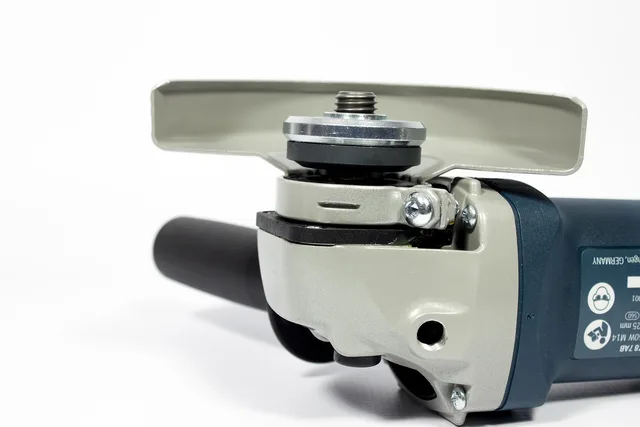
- Missing dust collection on a used concrete grinder is not a discount. It is a machine you cannot legally run the way you need to.
- Inspect used equipment against a written protocol, and walk away when the seller cannot produce service history.
- Record the purchase, the service and the disposal against the business, because how the asset is treated affects your books.
The arithmetic that settles most arguments
- Let A be the acquisition price, including delivery, tooling and any immediate repair.
- Let S be expected service and consumable cost over the period you intend to own it.
- Let V be the realistic resale value at the end of that period.
- Let U be the crew days the machine will actually be used in that period, taken from your calendar rather than from optimism.
- Ownership cost per crew day equals A plus S minus V, divided by U.
Run the formula for the new machine and the used one with the same U. The result is often counterintuitive: a used machine with unknown service history can carry a higher S and a lower V, and on a low U the two options land close enough that reliability decides.
Then add one term the formula hides. Let F be the cost of a failure mid-job: the crew hours lost, the rental you scramble for, the customer you move. Multiply F by your honest estimate of how often each option fails. That term is why the machine that stops a five-person day is bought new.
Where each option usually belongs
Usually new
- Moisture meters and test kits
- Yes
- Concrete grinder
- Depends
- Dust extractor or vacuum
- Yes
- Flooring nailer or stapler
- Table saw or miter saw
- Power stretcher and kicker
- Sanding and refinishing machines
- Depends
- Vehicle
- Depends
- Mixing and pumping equipment
- Depends
Usually used
- Moisture meters and test kits
- Concrete grinder
- Depends
- Dust extractor or vacuum
- Flooring nailer or stapler
- Often
- Table saw or miter saw
- Often
- Power stretcher and kicker
- Often
- Sanding and refinishing machines
- Depends
- Vehicle
- Often
- Mixing and pumping equipment
- Often
The deciding factor
- Moisture meters and test kits
- Accuracy with no service history is unverifiable
- Concrete grinder
- Dust extraction present and working
- Dust extractor or vacuum
- Filtration is the entire point of the machine
- Flooring nailer or stapler
- Serviceable, parts available, easy to test
- Table saw or miter saw
- Guards intact and arbor true
- Power stretcher and kicker
- Mechanical, inspectable, long life
- Sanding and refinishing machines
- Drum or disc condition and dust containment
- Vehicle
- Service history and load rating
- Mixing and pumping equipment
- Seals, cleanliness, and whether it was flushed
Typical U.S. price ranges, new against used
These are planning ranges for 2025, not quotes. Dealer pricing varies by brand, capacity, and region. Check a dealer such as Grainger or Home Depot for new list prices, and United Rentals, Sunbelt Rentals, eBay, or IronPlanet for used listings.
| Equipment | Typical new price | Typical used price | Notes |
|---|---|---|---|
| Pin-type moisture meter | $150 to $500 | $75 to $300 | Delmhorst or Tramex. Calibration matters more than age. |
| Concrete grinder, hand-held | $1,200 to $6,000 | $600 to $3,500 | Confirm dust shroud and working vacuum port. |
| HEPA dust extractor | $500 to $2,500 | $250 to $1,500 | Festool CT 36, Nilfisk, or Bosch. Filters add $50 to $200. |
| Flooring nailer or stapler | $400 to $800 | $150 to $450 | Bostitch, Powernail, or Primatech. Rebuild kits run $50 to $150. |
| Table saw or miter saw | $500 to $1,500 | $200 to $800 | Check guard, arbor, and fence alignment. |
| Power stretcher and kicker | $300 to $700 | $150 to $400 | Crain or Roberts. Mechanical parts are inspectable. |
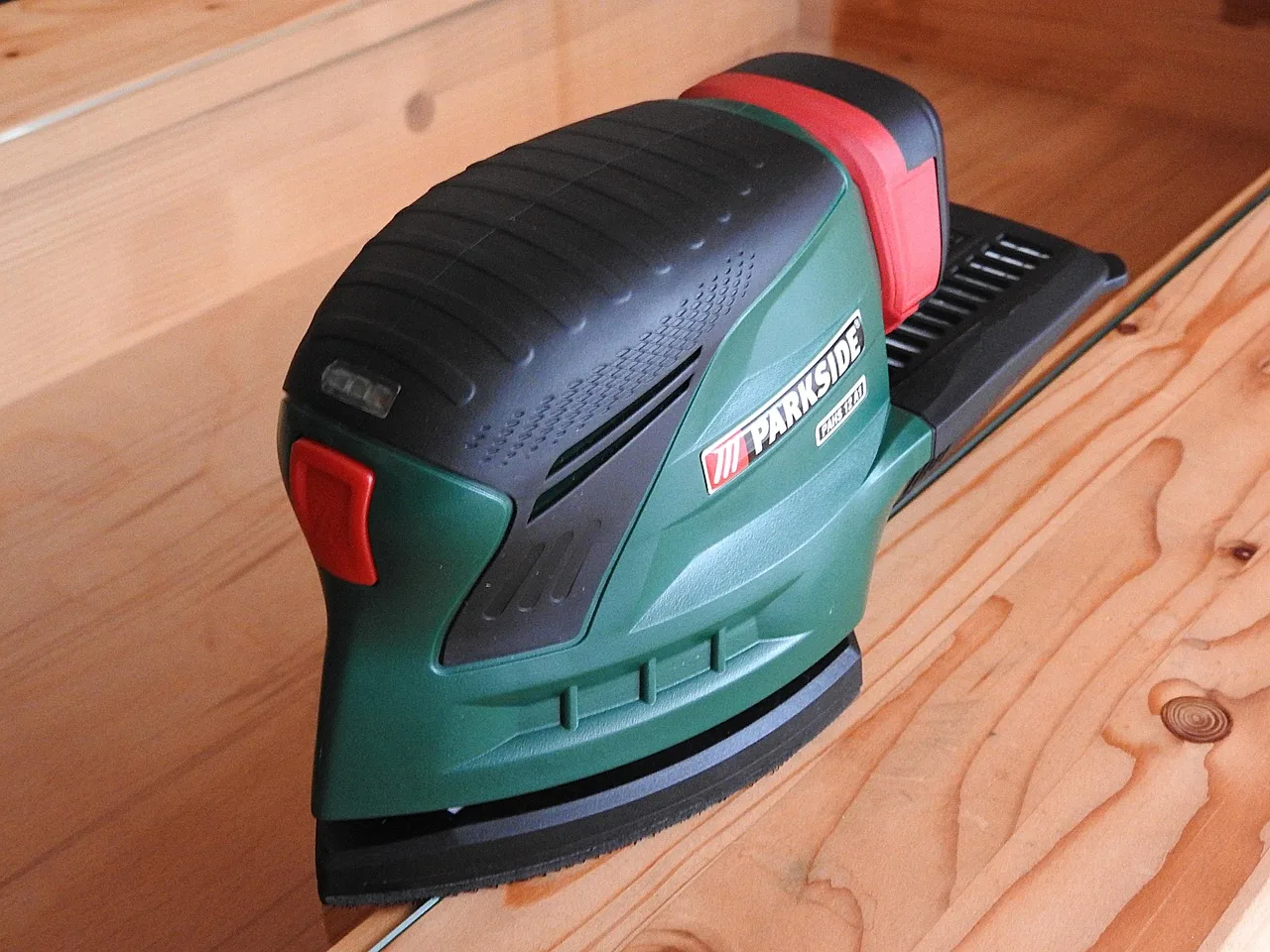
| Drum sander | $3,000 to $7,000 | $1,200 to $4,000 | Clarke or American Sanders. Drum condition drives value. |
| Cargo van | $35,000 to $55,000 | $15,000 to $35,000 | Ford Transit or Chevy Express. Mileage and service records decide. |
| Mixing and pumping equipment | $1,500 to $5,000 | $700 to $2,500 | Seals and flush history matter. |
For a worked example, a new grinder at $2,500 with $300 service and $1,000 resale over 40 crew days costs $45 per crew day. A used one at $1,200 with $900 service and $500 resale costs $40 per crew day.
An inspection protocol for used equipment
- Ask for the service record before you look at the machine. No record is itself an answer.
- Run it under load, not at idle. A grinder or sander that sounds fine unloaded can still have bearing or belt problems.
- Check that every guard, shroud and dust port is present and original. Missing safety hardware means either a hard life or a careless owner.
- Inspect the wear parts you would replace anyway, and price them into A.
- Check cords, switches and batteries. Electrical damage on a jobsite machine is common and easy to miss.
- Confirm parts and tooling are still available for the model. An orphaned machine is a rental you already paid for.
- Verify serial numbers and the seller's ownership before money moves.
For anything that generates dust or vapor, controls are part of the machine. A grinder without working extraction cannot run where silica exposure must be controlled.
The construction silica rule is OSHA 29 CFR 1926.1153.
A hazard-first program like the OSHA recommended practices for safety and health programs brings the control with the tool, not after the first exposure.
The same logic covers a used ladder or scaffold bought for stair and landing work. The requirements in the OSHA guidance on fall protection in residential construction tell you what that equipment has to make possible.
The paperwork half of the decision
How a machine is bought, financed and depreciated shows up in your books and in what a lender sees. Keep purchase documents, service invoices and disposal records for the asset.
Use a system that shows income and expenses as the Internal Revenue Service describes for business records. Ask your accountant how each option is treated for your structure before you sign anything.
Two other constraints sit outside the arithmetic. Some work carries registration, permit, or certification requirements, and a machine is useless without them, as the licensing and compliance guide covers.
A machine nobody is trained to run is not capacity, so the buying decision ties to the plan in the hiring and training guide.
Before you buy anything
Set the buying order from the equipment and setup guide. Confirm the consumables and hand tools are covered by the equipment checklist for a working crew. Then put the capital figure into the asset section of the business plan outline, so the purchase is measured against the whole company rather than one job.
Common questions
Is renting better than buying used?
Often, for a machine below the utilization where ownership pays. Rental also forces the cost onto the job that needed it, which improves your job costing.
How do I value a used machine fairly?
Work backward from the formula. Decide the ownership cost per crew day you would accept if it were new, then solve for the price that gets the used machine to the same figure with a higher service allowance.
What used purchase most often disappoints?
Anything with hidden wear on a component that is expensive to replace: a grinder head, a sander drum, or a vehicle transmission. Those are the purchases where service history matters more than appearance.
Should I buy a competitor's whole kit when they close?
Only item by item, using the same protocol. A closing business often sells its best tools separately and packages the rest.