Guides
How OSHA rules shape flooring installer safety on New York City jobs
Flooring installer safety in NYC: OSHA construction standards, Local Law 196 training cards, and co-op and condo building rules crews must follow on the job.
What to take away
- A flooring installer on a New York City job must follow OSHA construction standards, Local Law 196 training rules, and the building's own work rules.
- Fall protection is required at six feet or more in construction, and covers floor openings, balconies, and open stairwells.
- Dust and solvent exposures trigger a written respiratory protection program with medical evaluation, fit testing, and training.
- Local Law 196 requires Site Safety Training cards for workers on covered NYC sites, and flooring crews are not exempt.
- Co-op and condo boards add insurance, hours, elevator, and protection requirements that can stop a crew at the door.
- Bid documents should include safety training records, insurance certificates, and a site-specific safety plan.
OSHA construction standards that apply to NYC flooring jobs
Flooring installation is construction work under federal rules, so the standards in 29 CFR Part 1926 apply on New York City jobs. That covers demolition of old flooring, handling of adhesives and solvents, use of powered tools, and work around floor openings.
New York is a federal OSHA state for private employers. The State Plans page explains how some states run their own programs, but New York private-sector enforcement stays with federal OSHA, so the Part 1926 rules are the ones an inspector will cite.
A flooring contractor on a Manhattan high-rise or a Brooklyn walk-up still has to meet the same general duties: a competent person for inspections, hazard communication for chemicals, and housekeeping to keep egress clear. The NYC Department of Buildings adds permitting and site safety rules on top of that for covered jobs.
Subcontractor status does not remove the duty. If your crew is on a site, OSHA can inspect your work area and issue citations to your company as an employer. That is why a flooring installer should keep training records and inspection logs on hand.
Fall protection on flooring jobs at height or near openings
Fall protection is the standard most likely to be cited on a flooring job. Fall protection requirements apply at six feet or more in construction, and they cover more than roof work.
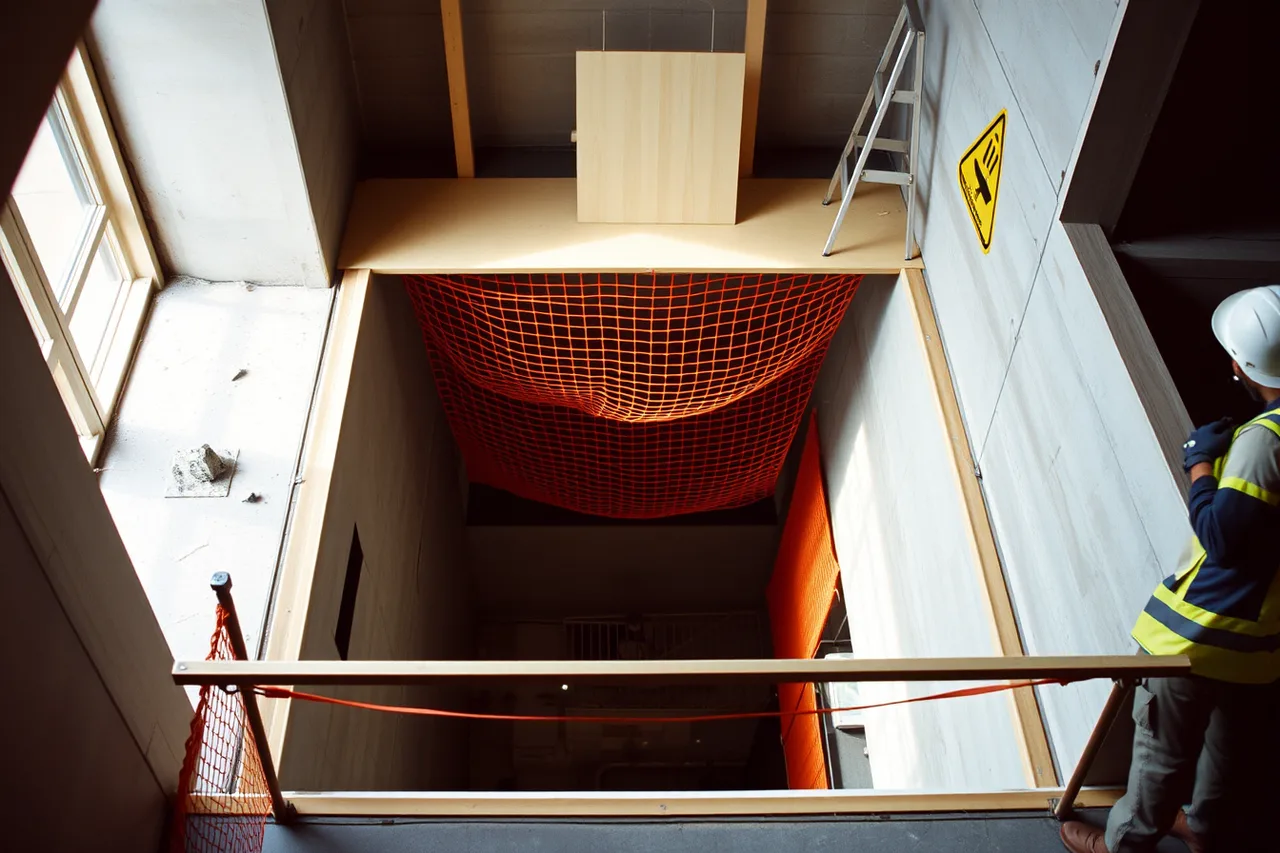
Flooring crews meet fall hazards at open stairwells, elevator shafts, balcony edges, mezzanine edges, and unfinished floor openings. Removing old flooring can expose a hole that was covered by carpet or tile. A missing cover or a removed guardrail is a citation waiting to happen.
OSHA's fall prevention campaign focuses on three points: plan, provide, and train. For flooring, that means identifying openings before work starts, providing covers or guardrails, and training each worker who could be exposed.
Personal fall arrest systems need a competent person, anchor points rated for the load, and inspection before each use. Body belts are not acceptable for fall arrest. A ladder used as a work platform is not fall protection.
On NYC jobs, the general contractor may control the perimeter, but your crew still needs its own protection when it works near an opening. Put the fall protection plan in the bid package so the GC knows what you will supply.
Respiratory protection for dust and fume exposure
Flooring work produces silica dust from concrete prep, wood dust from sanding, and solvent vapors from adhesives and finishes. Those exposures can require a written respiratory protection program under respiratory protection requirements when respirators are necessary.
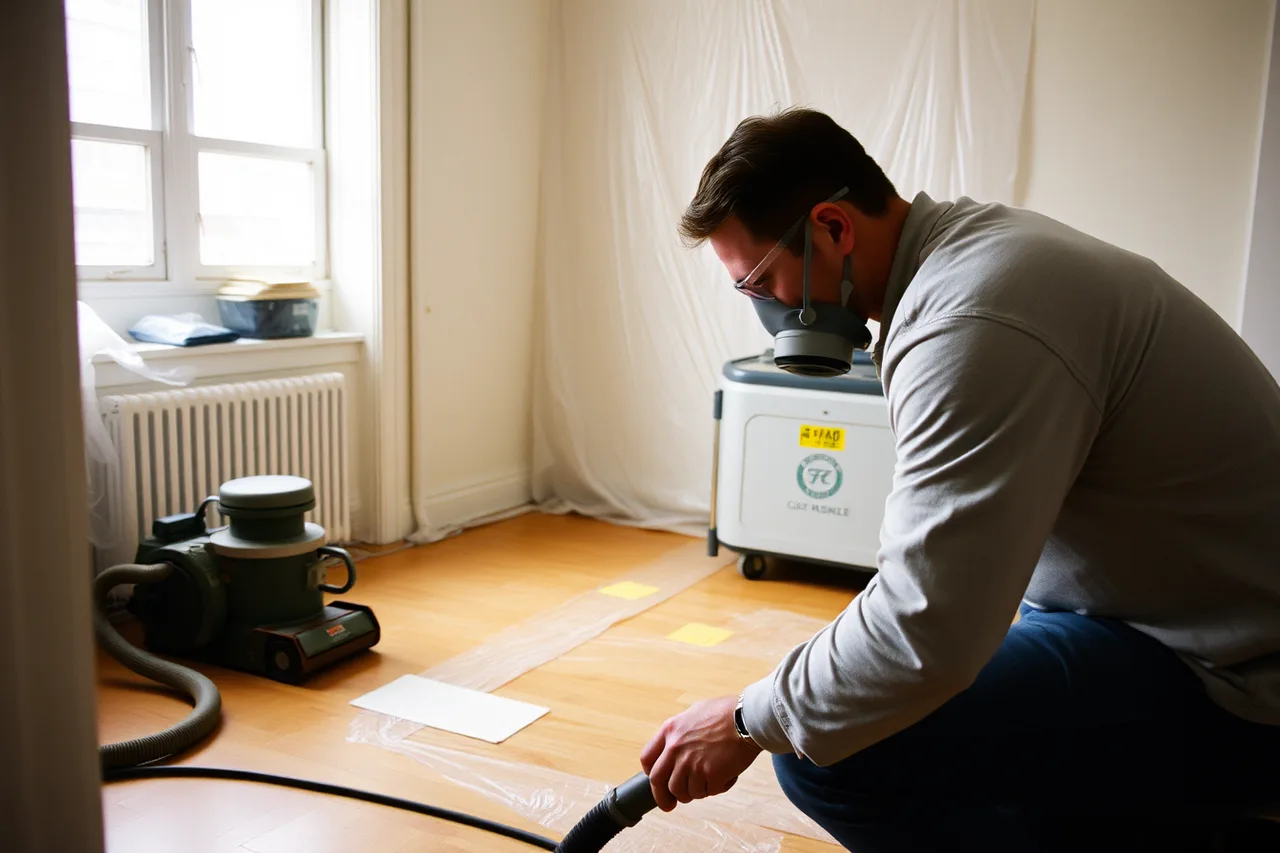
A compliant program includes a medical evaluation, fit testing, training, and cartridge change schedules. It also names a program administrator and covers voluntary use, where employees choose to wear filtering facepieces.
Dust control comes first. Wet cutting, vacuum attachments with HEPA filters, and local exhaust on sanders reduce exposure before a respirator is needed. On occupied co-op and condo jobs, contain dust with plastic sheeting and negative air machines.
Solvent-based adhesives and finishes need ventilation and, in some cases, air monitoring. If a product has an SDS that lists respiratory hazards, the hazard communication program must cover it, and workers must know where to find the SDS.
Fit testing must be repeated annually, and whenever a worker changes respirator model or size. Keep the records: they are part of the documentation a GC or building may ask for.
Local Law 196 training cards for flooring crews
NYC Local Law 196 requires Site Safety Training, or SST, cards for workers on covered construction sites. The law applies to sites that need a Site Safety Plan, generally larger or more complex jobs, and to workers at those sites.
The card shows that a worker completed the required hours: a 10-hour OSHA course plus 30 hours of site safety training for a standard card. Supervisors need additional hours. Cards expire and must be renewed.
Flooring installers who work on covered sites need the card in hand. The DOB can issue violations and stop-work orders for untrained workers, and the GC can be fined too. That is why many NYC bids now require card numbers before a crew is allowed on site.
Training records should be kept for each worker, including course provider, date, and card number. Use a flooring contractor local seo checklist to track who is current and who needs renewal before the next job starts.
Co-op and condo building rules in New York City
Co-op and condo buildings in New York add their own rules on top of OSHA and the DOB. Boards and managing agents control access, hours, insurance, and protection of common areas.
Most buildings require a certificate of insurance naming the co-op or condo as additional insured, with specific limits. They may also require a building alteration agreement, a security deposit, and a superintendent walkthrough before and after work.
Work hours are often limited to weekdays, with no noisy work on weekends or holidays. Elevator use may be reserved, padded, or banned for certain loads. Hallway and lobby protection, such as masonite or plastic, is commonly required.
Some buildings ban solvent-based adhesives and require low-VOC products. Others require proof of worker training, background checks, or union labor for certain trades. Read the building's alteration rules before you price the job, because they change labor and material costs.
If the building has a union requirement, confirm whether your crew can work or whether you need a union subcontractor. Getting this wrong can delay a job and put the bid at risk. A licensing and compliance review helps you spot these rules early.
Documenting safety compliance for NYC bids
NYC bids are won and lost on paperwork as much as price. A complete safety package shows the GC and the building that your crew can start without delays.
Use this checklist before you submit:
- OSHA 10 or 30 cards for each worker, plus Local Law 196 SST cards where required
- Respiratory protection program documents, including medical evaluations and fit test records
- Fall protection equipment inspection logs and the site-specific fall protection plan
- Certificate of insurance with required limits and additional insured endorsements
- SDS binder and hazard communication training records
- Competent person designation letters for fall protection and scaffolding
- Building alteration agreement and superintendent contact sheet
Follow these steps to build the package:
- List every worker who will be on site, with card numbers and expiration dates.
- Collect insurance certificates and endorsements from your broker, naming the owner and GC.
- Write a site-specific safety plan that covers fall protection, dust control, and chemical use.
- Attach training records and respirator fit test results for each exposed worker.
- Review the building's alteration rules and add any required forms or deposits.
- Submit the package with the bid and keep a copy in the job file.
Keep a compliance checklist for each new building you work in, since house rules differ from one co-op to the next. A quality assurance checklist can double as a safety audit before each phase.
When a GC sees a clean package, your bid is easier to approve and your crew is less likely to be turned away at the door.