Guides
Flooring contractor startup: local demand and crew capacity
A flooring contractor startup depends on local demand and crew capacity. Learn how to turn likely local work into a realistic crew-day plan.
What to take away
- A flooring business sells installed square footage, not boxes of material. Almost every bad job traces back to what was under the floor, not to the floor itself.
- Two site conditions void most manufacturer warrantiesa subfloor outside the flatness tolerance in the manufacturer's installation instructions, and a slab or wood deck outside the moisture limit those same instructions set.
- Capacity is counted in crew days. A market read that never converts demand into crew days produces a plan nobody can install.
- Installing as a subcontractor for retailers and builders is a different business from selling direct to homeowners: different cash cycle, different insurance, different calendar.
- Write your exclusions before the first job. Tear-out, disposal, furniture handling, subfloor repair and moisture mitigation each belong on their own line or in writing as not included.
What the business actually sells
A customer thinks they are buying a floor. You are selling labor against an unknown substrate, plus the risk that the substrate is worse than it looked on the day you measured. That single sentence explains most of what follows.


Material is close to a pass-through. You buy it, mark it up and install it, and the manufacturer stands behind it only if site conditions met its published requirements.
Labor is where the business lives, and preparation eats more of it than new owners expect. Grinding a high spot, filling a low one, scraping old adhesive, undercutting door jambs, cutting in a transition at a doorway: none of it is the finished floor the customer sees, and all of it is time.
Flatness and moisture decide whether a job holds up. Do not quote a tolerance from memory or from a competitor's website. The governing number is printed in the installation instructions for the specific product, and the acceptable test methods are named there too.
For concrete, run an in-place relative humidity test using ASTM F2170 or a calcium chloride test using ASTM F1869, when that method is permitted by the manufacturer. For wood subfloors, take a moisture meter reading of both subfloor and material after acclimation.
A business that treats those tests as billable, documented steps has a defense when a floor cups. A business that skips them owns the callback.
Reading a local market without buying a survey
You do not need a paid market report to decide whether a territory can feed a crew. You need to know who already controls the work and what they subcontract.
- List the routes work travels to reach an installerflooring retailers, home centers, home builders, general contractors on remodels, property managers and apartment turns, insurance restoration firms, and homeowners who search and call.
- For each route, find out who currently installs for them and whether they use employees or subcontract crews. A supply house counter and a builder's site superintendent will both tell you more in ten minutes than a report will.
- Count the housing stock and its age. The U.S. Census Bureau's American Community Survey provides housing and age data; use it to understand the territory, not as a count of flooring jobs. Slab-on-grade construction, crawlspace, and basement all change the moisture problem and therefore the preparation you will be selling.
- Check the local building department's permit records for residential remodels and additions where those records are available. The Census Bureau's Building Permits Survey is another source for permitted residential construction, but permits are a proxy for activity, not a count of flooring leads.
- Keep a lead ledger by route. Record inquiries, quote requests, awarded work, and the estimated crew days for each viable job. Build the crew-day estimate from the takeoff and a job-specific task plan that includes preparation and installation; do not count every permit or inquiry as work you will win.
- Add the crew days for the work you could realistically win, then compare that demand with the days you can staff. Update the estimate as actual bid outcomes and completed jobs give you better information.
The U.S. Small Business Administration business guide lays out the sequence for a new business: market research, startup costs, permits, insurance and hiring. It is a fair checklist for the non-installation half of the job.
For pay planning, the Bureau of Labor Statistics wage estimates by occupation and metropolitan area show what installers and helpers are paid where you operate. That number sets your labor cost long before you set your price.
Subcontract work versus selling direct
Installing for retailers and builders
- Who finds the job
- They do
- Who owns the measure
- Often their measure, your risk
- Cash cycle
- Their payment terms, usually after completion
- Substrate surprises
- Change order through them, slowly
- What you must build
- Reliability and a clean punch list
- Insurance and paperwork
- Their vendor requirements set the floor
Selling direct to the end customer
- Who finds the job
- You do, and you pay for it
- Who owns the measure
- Yours, and the takeoff error is yours
- Cash cycle
- Deposit at signing, balance on completion
- Substrate surprises
- Change order with the person standing there
- What you must build
- Estimating, sales, scheduling and marketing
- Insurance and paperwork
- Your own decisions, verified locally
Most owners start on the subcontract side because the phone rings without marketing spend, then add direct work once they can estimate reliably. Running both at once from day one is the common way to fail at both.
Setting up the money and the paperwork
Register the entity, get the tax identification you need, and open a separate account before the first deposit lands. Apply for an EIN directly through the Internal Revenue Service's online EIN Assistant if eligible, or use Form SS-4. The IRS guidance on starting a business lists federal obligations that begin at formation, including which returns follow from which structure.
Contractor licensing is not a single nationwide process. Check the official contractor licensing board or equivalent state agency for the jurisdiction where you will work, and use its license lookup and application instructions to confirm registration and bond requirements. The city or county building department explains which permits apply to a particular job; there is no single national permit form for flooring work.
Safety is not paperwork you add later. A crew that grinds concrete, uses adhesives in enclosed rooms and carries heavy rolls up stairs has real exposures on day one. Build a written program that finds and fixes hazards before an inspection does, following the Occupational Safety and Health Administration's recommended practices for safety and health programs. For construction work that can expose employees to respirable crystalline silica, consult OSHA's silica standard, 29 CFR 1926.1153.
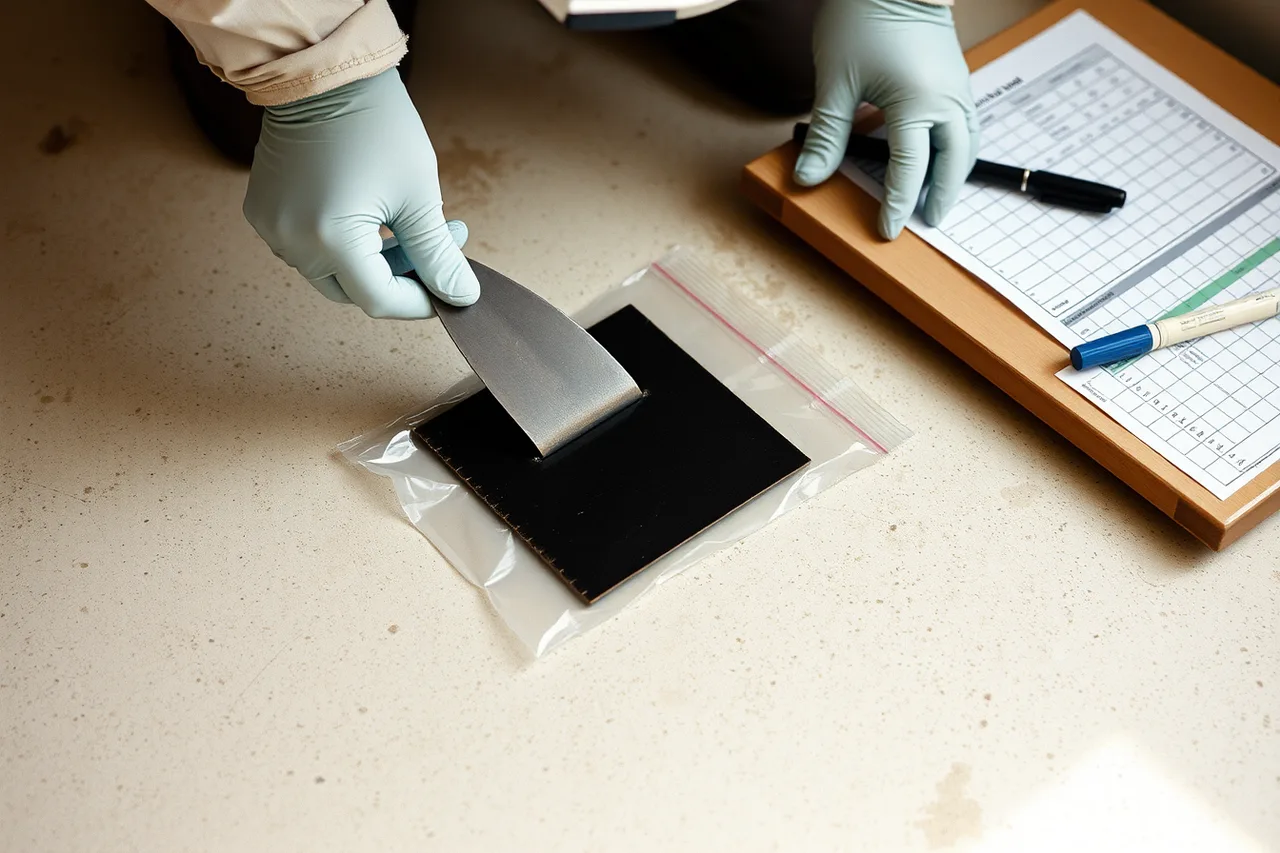
Three hazards come first: silica from cutting and grinding concrete, adhesive vapors, and old resilient flooring or black cutback adhesive that may contain asbestos in an older building. Suspect material is sampled and tested, never sanded or dry-scraped.
Crew-day capacity planning
Work in variables so the arithmetic survives a change in your rates.
- Let C be crews available and D the installable days in the month after weather, holidays and callbacks.
- Let A be the average square feet a crew installs per day for your dominant product, measured from your own completed jobs rather than a supplier's claim.
- Then monthly installed capacity equals C times D times A.
- Let P be your average price per installed square foot and M your contribution per square foot after material, labor and burden.
- Monthly contribution equals C times D times A times M, and your fixed costs divided by that daily contribution tells you how many crew days per month simply pay the overhead.
Run the same arithmetic with A cut for a preparation-heavy job type, and the reason careless bidding on old slabs destroys a quarter becomes obvious. Preparation days consume capacity at full labor cost while producing very little billable finished floor unless you priced the preparation as its own line.
Common questions
Do I need a warehouse to start?
Not usually. You need dry, temperature-stable space for material that is acclimating and a place to keep tools secure. Many installers start with a van and a rented unit, then add space when they begin taking delivery of full container quantities or holding attic stock for builders.
Should I buy a measuring device or measure by hand?
Either can produce a correct measure. Neither produces a takeoff. A measure is a set of field-verified dimensions; a takeoff converts those dimensions into ordered quantities for a specific product width, plank direction, pattern repeat and seam plan. Owners who conflate the two order short and eat the return trip.
How much preparation should I include in a first quote?
Include what you can see and price what you cannot as a stated unit rate. A line that reads as a rate per square foot for grinding, patching or leveling, applied to actual measured area after tear-out, keeps you honest and keeps the customer from feeling ambushed.
Is it worth chasing commercial work early?
Commercial jobs run on schedules set by other trades, carry retainage, and often require prevailing wage documents, bonding or a safety record you do not have yet. Build the residential and retail base first unless a specific relationship hands you a commercial job with terms you have read.