Guides
Flooring contractor hiring: vet installers with a paid trial day
Flooring contractor hiring, step by step: where to find installers, the questions that reveal substrate judgment, and how to run a paid trial day.
Flooring contractor hiring: vet installers with a paid trial day
Mistake: Asking an installer to work unpaid
What goes wrong: The costliest mistake is an unpaid trial day. Under the Fair Labor Standards Act (FLSA), every hour worked, including a tryout, must receive at least the federal minimum wage, with overtime after 40 hours in a workweek. It signals disregard for the installer's time.
Why: The Department of Labor's FLSA reference guide explains small-business pay and recordkeeping duties. Record the employee's name, hours worked each day, total hours each week, pay rate, and wages paid. Paying the role's normal rate is clearest; unpaid trials remain a common self-inflicted problem in small trade businesses.
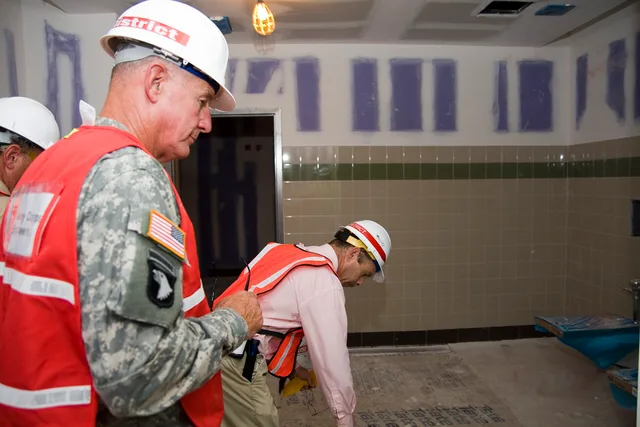
Fix: Run a full evaluation day on a live job with a lead present, observing setup, the middle of the shift, and cleanup. Assign duties that fit the role, including a slab check with a meter or probe kit, a layout line, a cut, and site cleanup.
Watch the candidate set up, react when an issue disrupts the plan, and leave the site. Skill can appear early, while judgment shows when plans shift. Put the person on payroll from the first hour, covering the work while letting you assess performance rather than relying on conversation.
Mistake: Hiring on confidence alone
What goes wrong: An interview centred on years in flooring can reward confidence without showing trade judgment. Substrate and job-situation questions reveal how a candidate reasons; ask each person the same prompts, compare specific answers with written standards, and keep notes.
Why: Time in the trade alone does not show how someone checks a substrate, handles missing material, learns from a failed floor, or protects a home. Specific examples expose the candidate's reasoning, while identical prompts make comparisons fairer and notes preserve what each person actually said.
Fix: Put the same practical prompts to every candidate, compare answers against written standards, and record details. Listen for a named method, a clear reason to stop, and evidence that the person protects the home and reports problems rather than improvising. Ask about these situations:
- How do you check a slab before installing over it? Listen for a named test method, recorded readings, and a reason to stop.
- What do you do when delivered material is short? Listen for stopping to call rather than improvising the layout.
- Tell me about a floor that failed. Listen for the cause and what changed, not blame.
- How do you decide plank direction in a room? Listen for light, the longest run, transitions, and the customer's preference.
- What would you do with old tile suspected of containing asbestos? Listen for stopping, not disturbing it, reporting the concern, and testing.
- How do you leave a house at the end of a day? Listen for specific protection and cleanup details.
Look for at least one named method, not a confident generality. Standard slab checks include ASTM F2170 for in-situ relative humidity, ASTM F1869 for calcium chloride moisture vapour emission, and ASTM F710 for preparing concrete to receive flooring. The candidate should identify the method and explain why it matters on the job.
Treat suspected asbestos-containing material in an older building as a separate stop-work concern. A licensed inspector tests it; applicable rules include OSHA's asbestos standard for construction, 29 CFR 1926.1101, and the EPA's NESHAP rule, 40 CFR Part 61 Subpart M. The candidate should stop and report the concern rather than disturb the material.
Mistake: Leaving the role undefined
What goes wrong: An undefined opening can attract people whose skills do not match the work and make fair comparisons harder. Calling every vacancy an installer job conceals whether you need a helper, installer, preparation specialist, or lead, and what the person must handle independently.
Why: A helper can often be hired without flooring experience. Attitude and reliability are harder to train than cutting; installers need judgment about substrate and layout, and that ability takes time to develop. These jobs therefore call for different responsibility levels and expectations about what the employer will teach.
Fix: Describe what the person must do independently, what you will train them to do, and what they will never be asked to handle. Name the responsibility level and route to advanced work. Connect that progression with training through the hiring and training guide.
Mistake: Hiding pay and working conditions
What goes wrong: An offer that hides pay or working conditions makes jobs difficult to compare and can push a qualified candidate away. Without clear details on travel, load-out time, schedule, tools, or advancement, applicants cannot tell what the role actually provides before accepting.
Why: Candidates need to understand the arrangement before deciding; unclear terms invite different assumptions about compensation, time, and supplied tools. An installer considering a move from a competitor may be especially alert to conditions that prompted their departure, and those conditions may matter in a new role.
Fix: State the pay basis and schedule, explain how travel and load-out time are treated, list tools the business provides, and show the route to the next level. Choose the pay basis deliberately rather than leaving applicants to guess. Clear terms help candidates compare the job with another offer.
Before choosing a rate, check Bureau of Labor Statistics occupational wage estimates for installers and helpers in your area, then decide where your offer sits relative to those figures. If you are considering an installer from a competitor, ask what would have kept them there; their answer may identify something that will matter to them at your business too.
Mistake: Looking for workers in just one place
What goes wrong: Searching through only one channel can leave qualified workers undiscovered. People may already be working nearby or building skills through training, so a narrow recruitment effort can miss someone who fits the opening before you compare their ability with your needs.
Why: A search limited to job-board applicants overlooks potential referrals and people encountered on current jobs. Decide where to look before posting, so you use several sources rather than relying on a single stream of candidates.
Fix: Include people your crew knows, workers you meet on current jobs, supplier and supply-house counters, other trades, trade programmes, apprenticeships, and referrals. State any referral reward in advance, and pay it only after the new hire completes a probationary period, not on the first day. Ask counter staff who is working and who is between jobs.
Relevant credentials include the Ceramic Tile Education Foundation's Certified Tile Installer (CTI) credential, International Certified Floorcovering Installers Association (CFI) certifications, and FCICA's Certified Installation Manager (CIM) programme for a lead you are grooming. Registered apprenticeships are listed on the U.S. Department of Labor's Apprenticeship.gov.
Job-board adverts work best when they name the pay basis and schedule instead of hiding either. Stating those terms alongside the role's responsibility level gives applicants a clearer way to judge whether the work fits their experience and expectations before they apply.
Mistake: Skipping reference checks
What goes wrong: Skipping references can leave doubts unresolved and lead to hiring someone whose work history already raised concerns. Ask previous employers the same questions for each candidate: attendance, how the person handled a mistake, and whether they would rehire them.
Why: Dependability is a pattern, not a promise. Look for evidence of showing up, finishing work, and telling someone when something went wrong; an interview alone cannot establish it. References and a paid trial day provide better evidence, and the service quality pointers treat reliability as a practical performance measure.
Fix: Keep selection criteria tied to the job and apply them consistently. The EEOC's small-business guidance explains federal duties and how workforce size affects which ones apply. State law often reaches smaller employers, so check both before setting up the hiring process.
Mistake: Waiting until work starts to check compliance
What goes wrong: Leaving registration, certification, and worker classification checks until work begins can leave required paperwork unfinished. Before the first jobsite day, confirm what applies through your state contractor licensing board and the state labour office responsible for workers' compensation and unemployment insurance.
Why: Requirements vary by location, so an example from another state cannot replace checking your own rules. California's Contractors State License Board is one example of a state licensing board; its requirements do not automatically apply elsewhere.
Fix: Confirm state requirements rather than assuming one framework fits every location. The licensing and compliance guide reviews license, insurance, and compliance paperwork that may apply to a new installer.
Complete Form I-9 using the identity and work-eligibility documents the employee presents, and obtain Form W-4 for withholding. Also complete the workers' compensation and unemployment insurance registration your state requires. Finish these steps before the first jobsite day, not after work has begun.
Do not issue a 1099 before applying the IRS worker classification test. An installer whom you schedule, direct, and supply with tools is an employee; back taxes and penalties follow the classification, not the invoice. The crew equipment checklist can help identify the tools the business provides.
Mistake: Leaving the first weeks to chance
What goes wrong: Leaving the first two weeks unplanned can weaken retention, even after a strong offer. Without a lead assigned responsibility for training, the new hire may not receive a consistent introduction to the role or its work standards.
Why: A new employee should not have to borrow another person's hand tools or guess how equipment and duties are meant to be handled. Machines also need to be set up and safe before the employee uses them.
Fix: Pair the employee with a lead who has been told they own the training, and provide the hire with their own hand tools. The equipment and setup guide covers saws, mixers, and dust control they may be handed.
Connect the role's progression with a training sequence, and make the probationary period long enough to see the employee on a difficult job. State its length, review the employee on the date promised, and explain what happens next; do not let the period quietly lapse.
Mistake: Completing hiring stages out of order
What goes wrong: Skipping stages or completing them in the wrong order weakens comparisons and can push important checks until after you have committed. A written sequence gives each candidate the same steps and ensures each stage supplies the information needed for the next decision.
Why: The order affects who applies, what you learn before an offer, and whether required paperwork is ready before work starts. Interview before the paid trial, check references before making an offer, and complete compliance checks before the first jobsite day.
Fix: Set a consistent sequence for every candidate:
- Define the role and pay basis before advertising.
- Screen by phone with the same questions and keep notes.
- Interview, then run the paid trial, never the other way around.
- Check references before making an offer.
- Put the offer in writing with the schedule and progression path.
- Confirm eligibility, classification, and insurance before the first jobsite day.
- Review the hire on the promised date and state what happens next.
Keep notes and apply the written standard consistently from the first screen through the offer. Interview before the paid trial, check references before making an offer, and finish required paperwork before work starts. Hold the review on the promised date so both sides know the next step and expectations remain clear.